The idea of digital identity is that ever since the introduction of social media and social networking websites, people portray themselves differently than they would in real life. People’s posts, pictures, videos and actions online and on their personal profiles display an image and reputation they wish to put out into the world. Beyond just posting pictures and word posts on these sites, social media has completely revolutionized the way that people interact on a daily basis, as well as the way romantic relationships are created and maintained, as well as broken off.
One major affect that social media has had on the daily lives of people is that many people, especially millennials and younger, have lost the complete ability to live in the moment. Anytime you see somebody of this age cohort, they will 9 times out of 10 have their cell phone in their hand whether or not they are using it at all. Our phones have become an extension of our hands. According to a survey conducted by YouGov Omnibus, “just over 50% of millennials report that they now carry their phone in their hand throughout the day” [1]. The following graph is the survey from this study showing the age groups that carry their phones in their hand throughout the day.
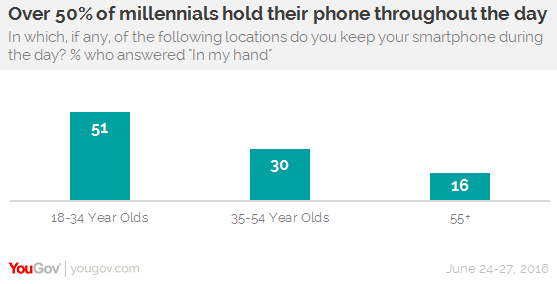
The fact that millennials are constantly in contact with their cell phones, deviates the reality of almost every situation they are in. They would much rather take a picture and text their friends about the places they are going and have been, rather than actually enjoying it in the moment. I myself am guilty of this in many aspects. My phone is always in my hand whether I am using it or not, and I am always on social media whether just taking pictures on snapchat, or scrolling through Instagram to see other people’s pictures. As sad as it seems, this is the way that almost all people my age interact and live life.
Not only does social media and cell phones impact daily interactions with people, it also affects intimate relationships with family and friends and significant others. It seems, in this day and age, that many couples take pictures and post with each other only to receive reactions and feedback from everybody that isn’t them. They want the most likes and they want to show off that their happiness together is better than other peoples’. I have seen this happen first hand with my own friends. They will take pictures and post with their boyfriends or girlfriends just to get the most likes or views on a picture, rather than just focusing on being with their significant other. I have also witnessed couples spend 15+ minutes taking the same picture because the girl didn’t like any of them and wouldn’t stop until she was satisfied. This constant obsession with what other people are thinking of our own personal lives is completely heightened with the institution of social media and SNS.
Beyond what other people think of them, social media can also have a huge impact of what partners can think of each other based on their social media activity. I have witnessed numerous relationships break up over something on social media, whether it was somebody liking a certain persons pictures, or subtweeting about their significant other, or commenting things on somebody else’s picture, social media is, a lot of the times, at the center of most conflicts nowadays. According to Kenadie Wilkerson in Inquiries, she talks about how “social networking sites allow us to see things on our partners profile that can influence our emotions towards them” [2] such as anger and jealousy, which can lead to nasty fights and even breakups. Everybody reads so much into everybody’s activity on their social media accounts that it is like we live another life on our profiles that is completely different from our own.


One’s digital identity is so crucial and important to who they believe that they are, whether it is an accurate representation of them in real life or not. A perfect example of this is the rising popularity of Tinder and other dating websites. The idea is to make yourself appealing to whoever you are trying to impress, so you create the most fake and most “perfect” version of yourself just so that other people will think you are more interesting or beautiful than you are in real life. This is the case with most people whether they know it or not. Everyone is always trying to post the best looking photos with the best edits, and no one really posts pictures where they look “real.” This is a rising issue nowadays with millennials and younger generations that I do not see a solution in sight.
Works Cited:
- Heibert, Paul. “Half of Young People Hold onto Their Phone throughout the Day.” YouGov, July 6, 2016. https://today.yougov.com/topics/lifestyle/articles-reports/2016/07/06/young-people-carry-phone-in-hand.
- Wilkerson, Kenadie. “Social Networking Sites and Romantic Relationships: Effects on Development, Maintenance, and Dissolution of Relationships.” Inquiries 9, no. 3 (2017). http://www.inquiriesjournal.com/articles/1576/social-networking-sites-and-romantic-relationships-effects-on-development-maintenance-and-dissolution-of-relationships.

 Rachel's Blog